Rescue and navigation robotics
A two-part robotics competition: build robots to rescue stranded figures across an obstacle course, then build a fully autonomous rover to carry a figure through a maze without any operator input. Team of four, with Bailey as team lead.
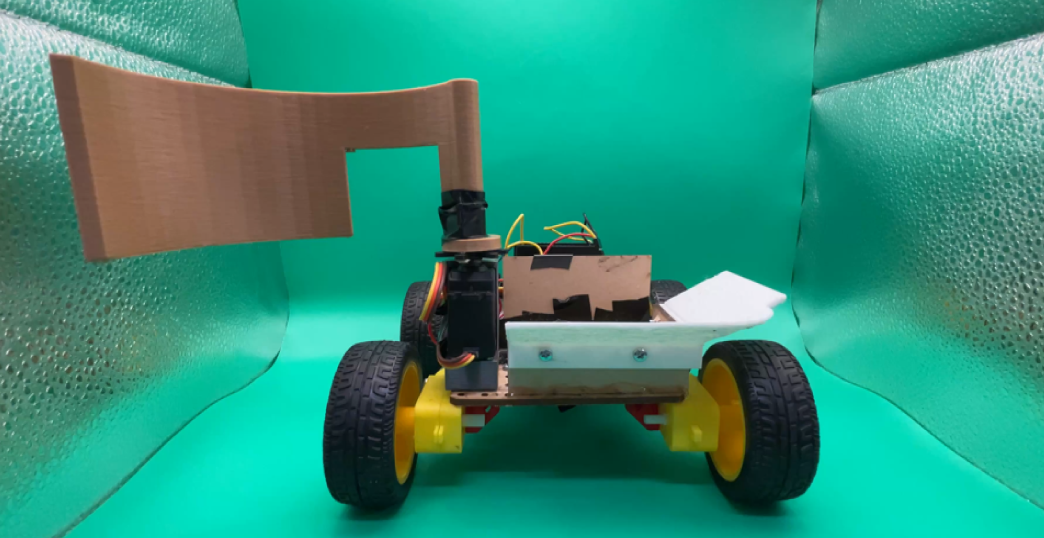
Two design problems, one course
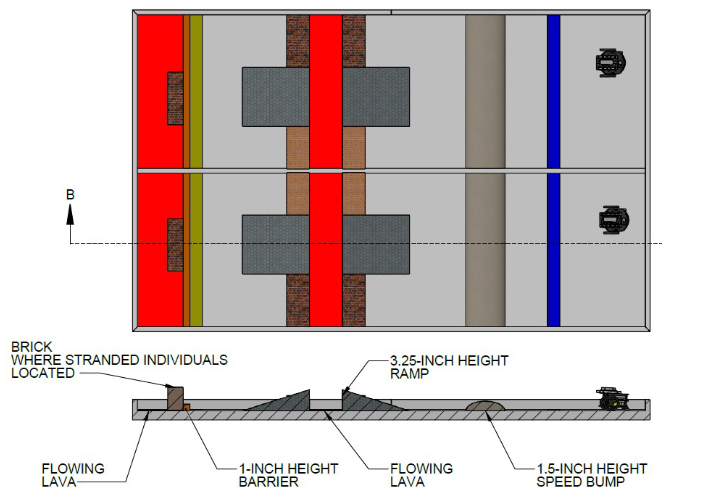
DP1 — Rescue robots
- Rescue stranded figures across a set course
- Max of 3 robots, 4-minute time limit
- Cross a 1.5-inch speed bump and a lava gap between two 3.25-inch ramps
- Avoid the lava area completely
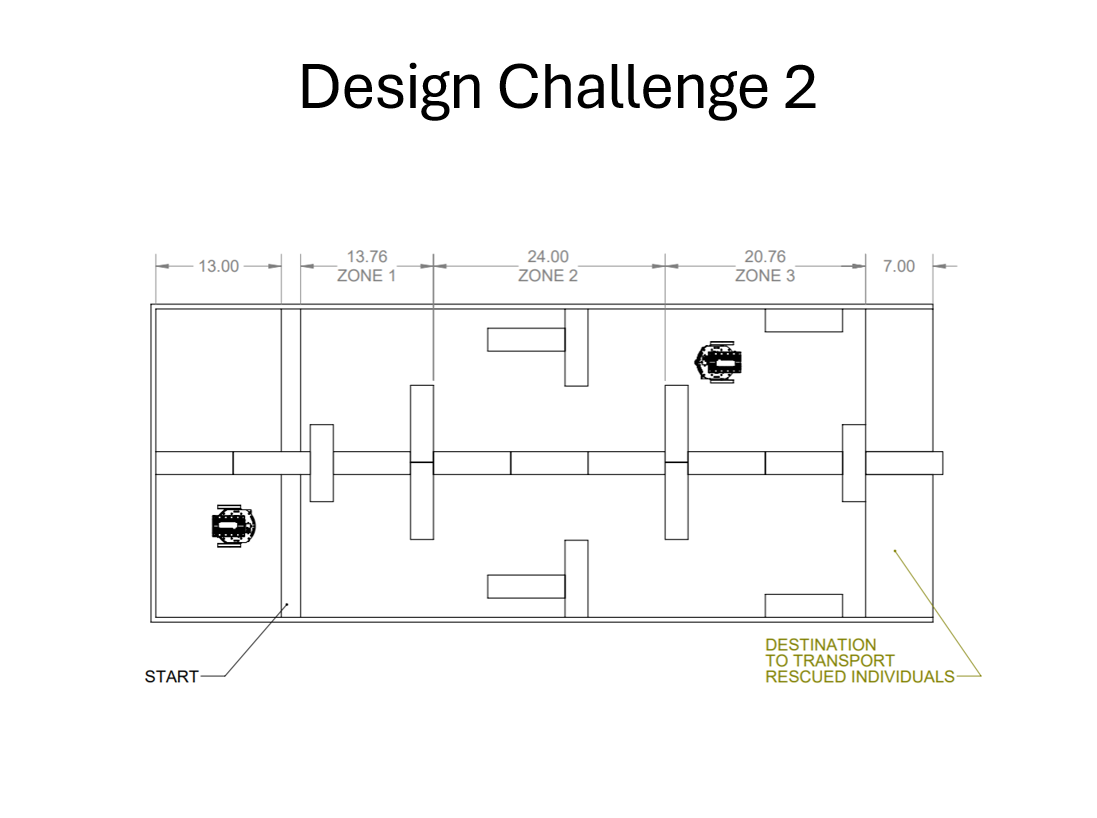
DP2 — Autonomous rover
- Transport a rescued figure through a 3-turn maze
- 2-minute time limit
- Run completely autonomously, no manual control
- Stop within accuracy tolerance at the destination edge
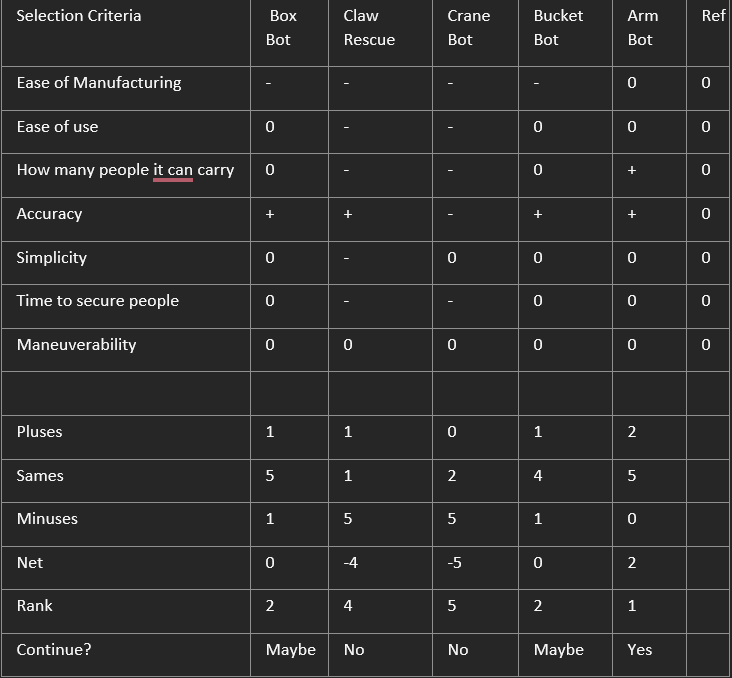
Screening before building
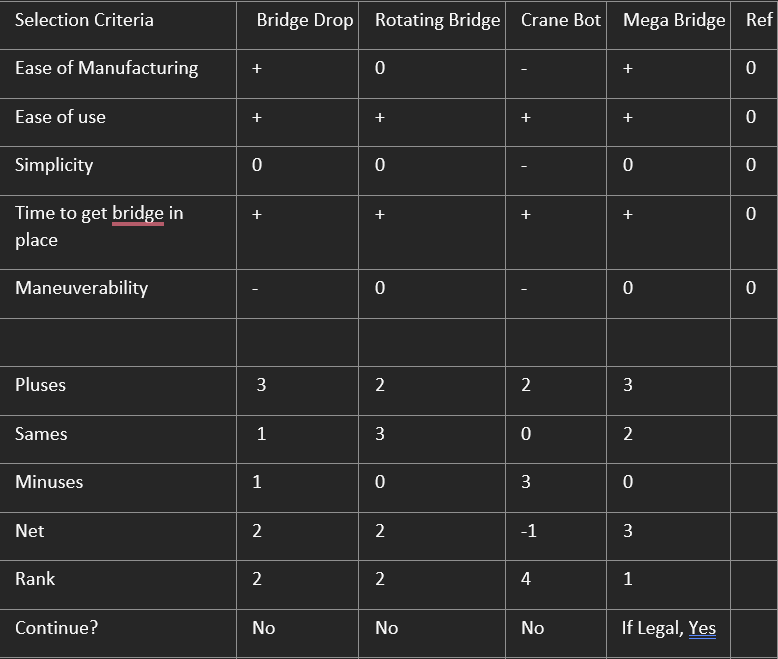
Before committing to any single mechanism, we scored multiple concepts against weighted criteria for each robot — ease of manufacturing, ease of use, accuracy, maneuverability, and how many people each design could carry or how fast it could deploy. The arm-based rescue bot and the mega bridge design came out ahead and became our starting points.
From sketch to failure to fix
Every mechanism went through multiple failed builds before we landed on something reliable. Here's the path for both robots, roughly in order.
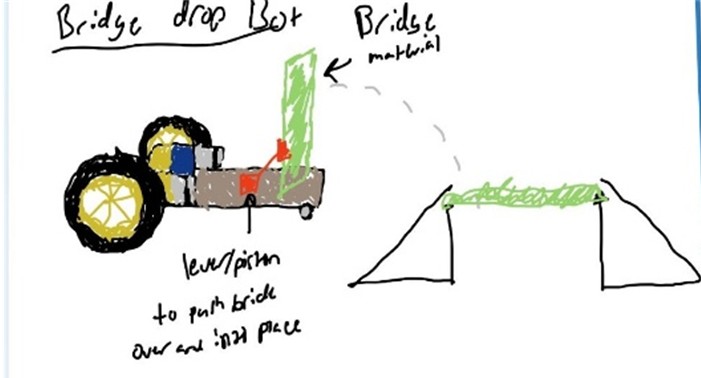
Bridge drop bot
Early concept using a lever/piston to push bridge material up and over into place. Simple in theory, but hard to control precisely with a single actuator.
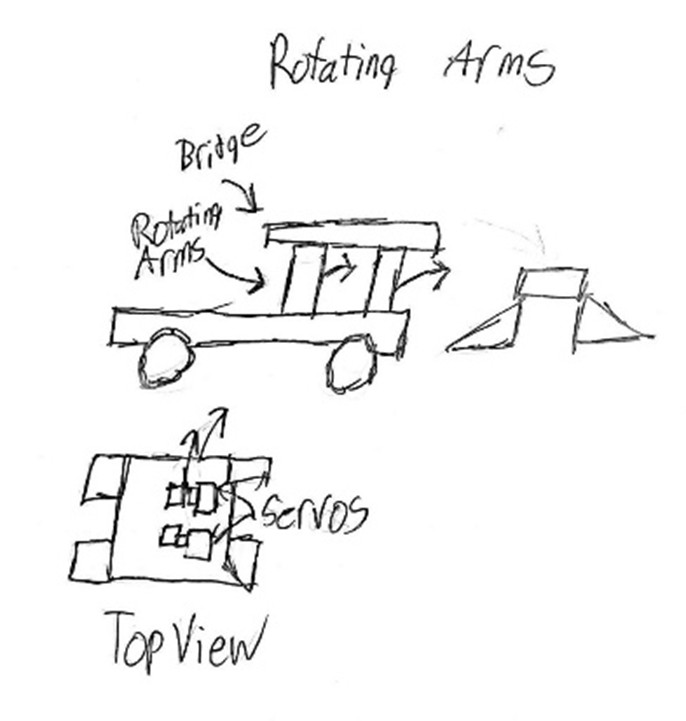
Rotating-arm bridge bot
Replaced the piston with servo-driven rotating arms to lower the bridge more predictably, sketched out with a top-view servo layout.
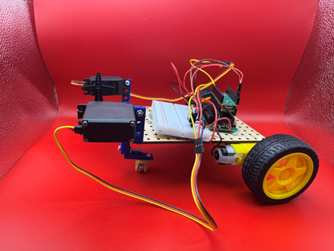
First bridge robot
Struggled to clear the initial speed bump — the front geometry wasn't tall enough to ride over it cleanly.
Long bridge, redesigned
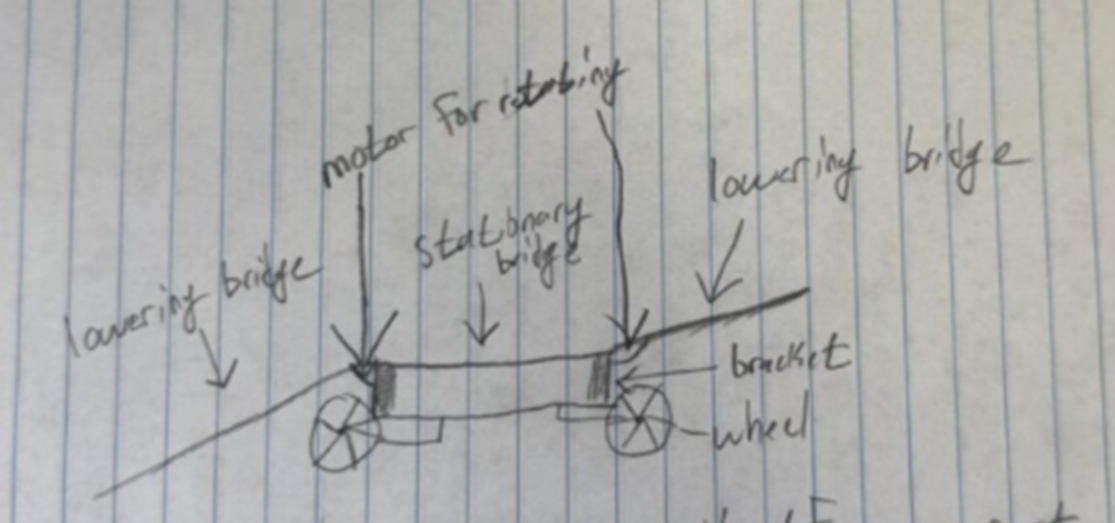
Reworked the bridge geometry with a stationary center section and lowering ends on brackets, aiming for a more stable placement across the gap.
Final bridge robot
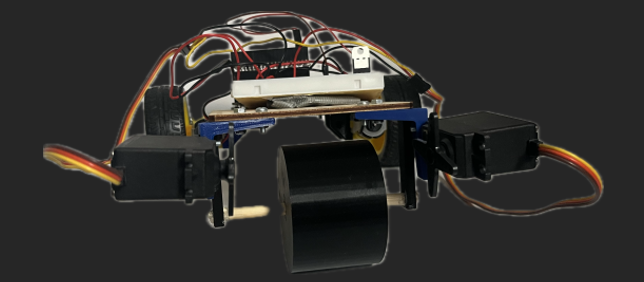
Added a much larger cylindrical front wheel and lowered the servo mounts to clear the bump reliably, with dual servos handling deployment.
Arm rescue bot
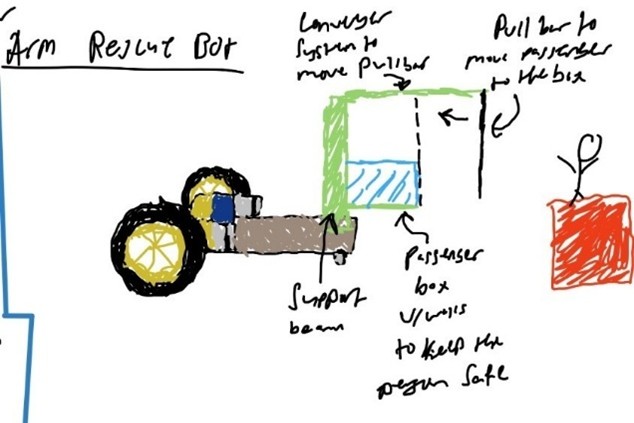
Used a pull-bar and conveyor system to move a walled passenger box toward the stranded figure. Mechanically complex for what it needed to do.
Claw rescue bot
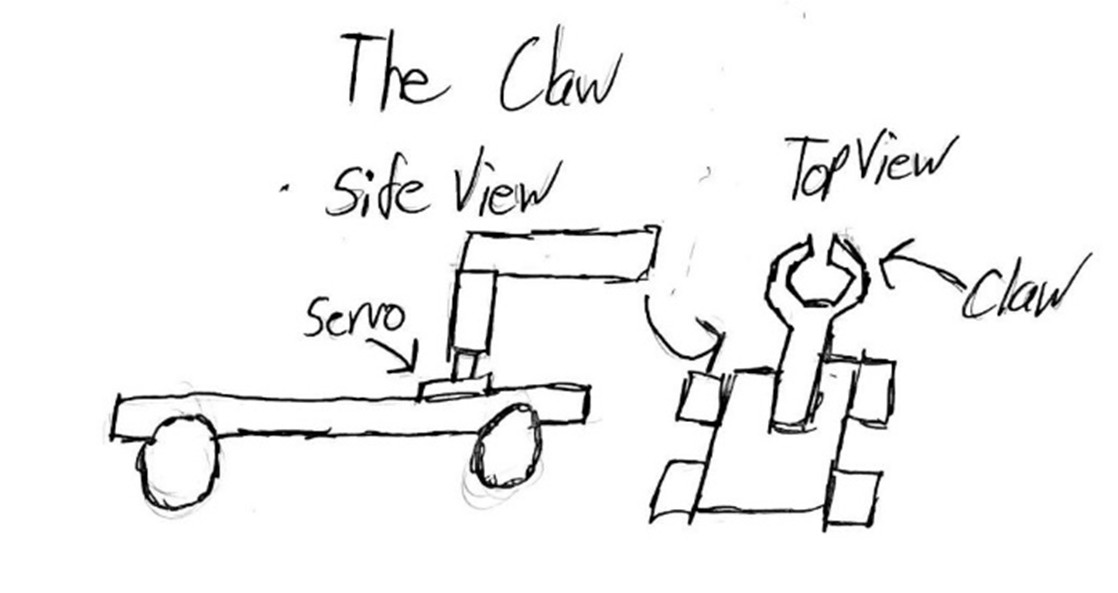
Swapped to a servo-driven claw meant to grip and lift figures directly. Cardboard and popsicle-stick mockups gave way to a 3D-printed version.
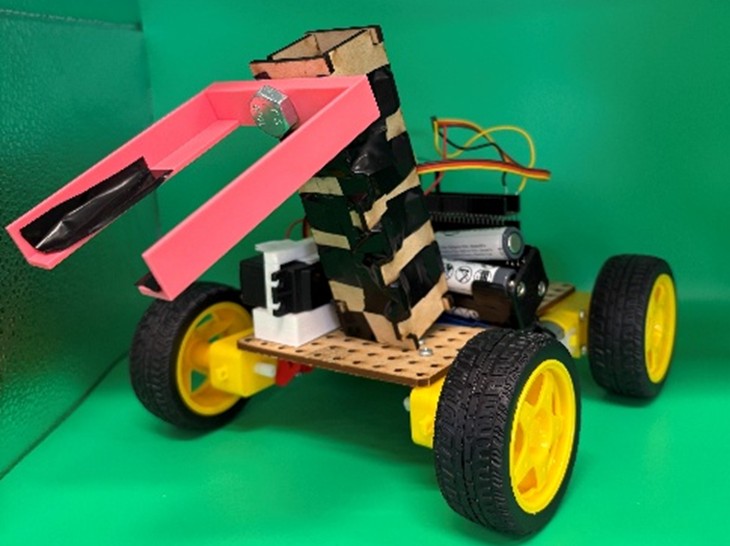
Claw prototype, built and tested
Alignment and claw width made pickup unreliable in practice — the mechanism worked on paper but not consistently on the course.
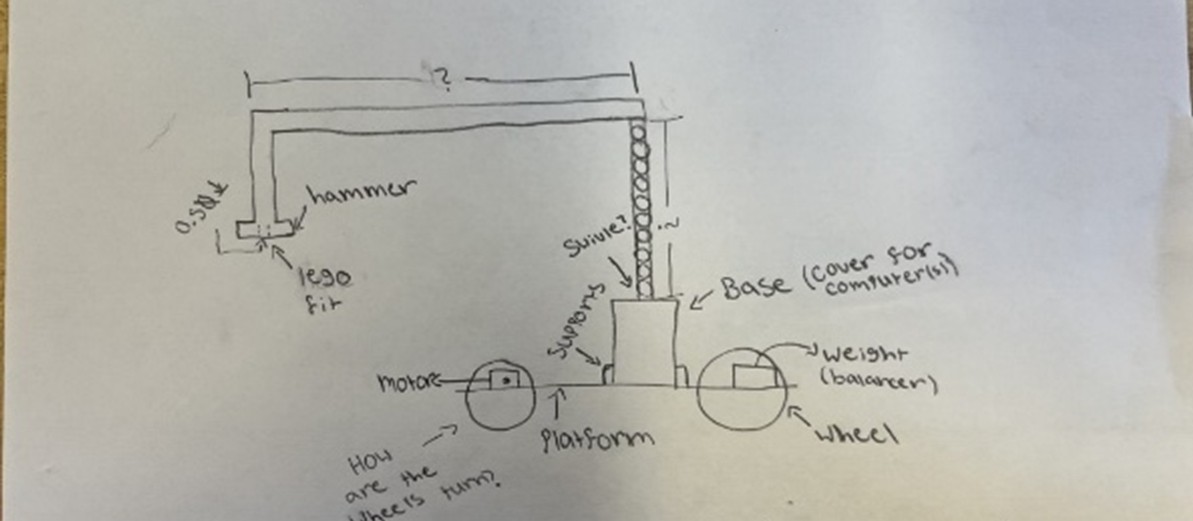
Swivel-mount attachment
Explored a hammer-style attachment on a swiveling base, weighted for balance. Ultimately too complex to fabricate reliably in the time we had.
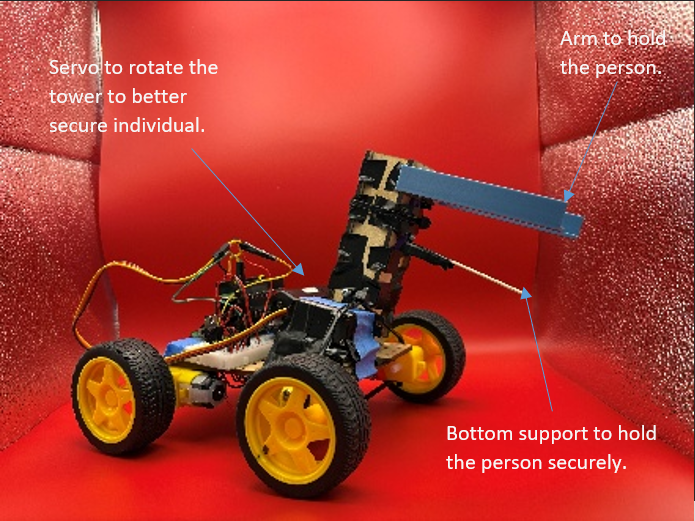
Arm bot, first build
A rotating tower with an arm to hold and secure the figure. Functional concept, but the pickup mechanism still wasn't consistent enough to trust in competition.
Sweep-arm rescue bot
Replaced the lifting/gripping approach entirely with a simpler servo-driven sweep arm that pushed figures into a laser-cut basket. Less elegant, far more reliable — this is what we ran in competition.
Building the maze rover
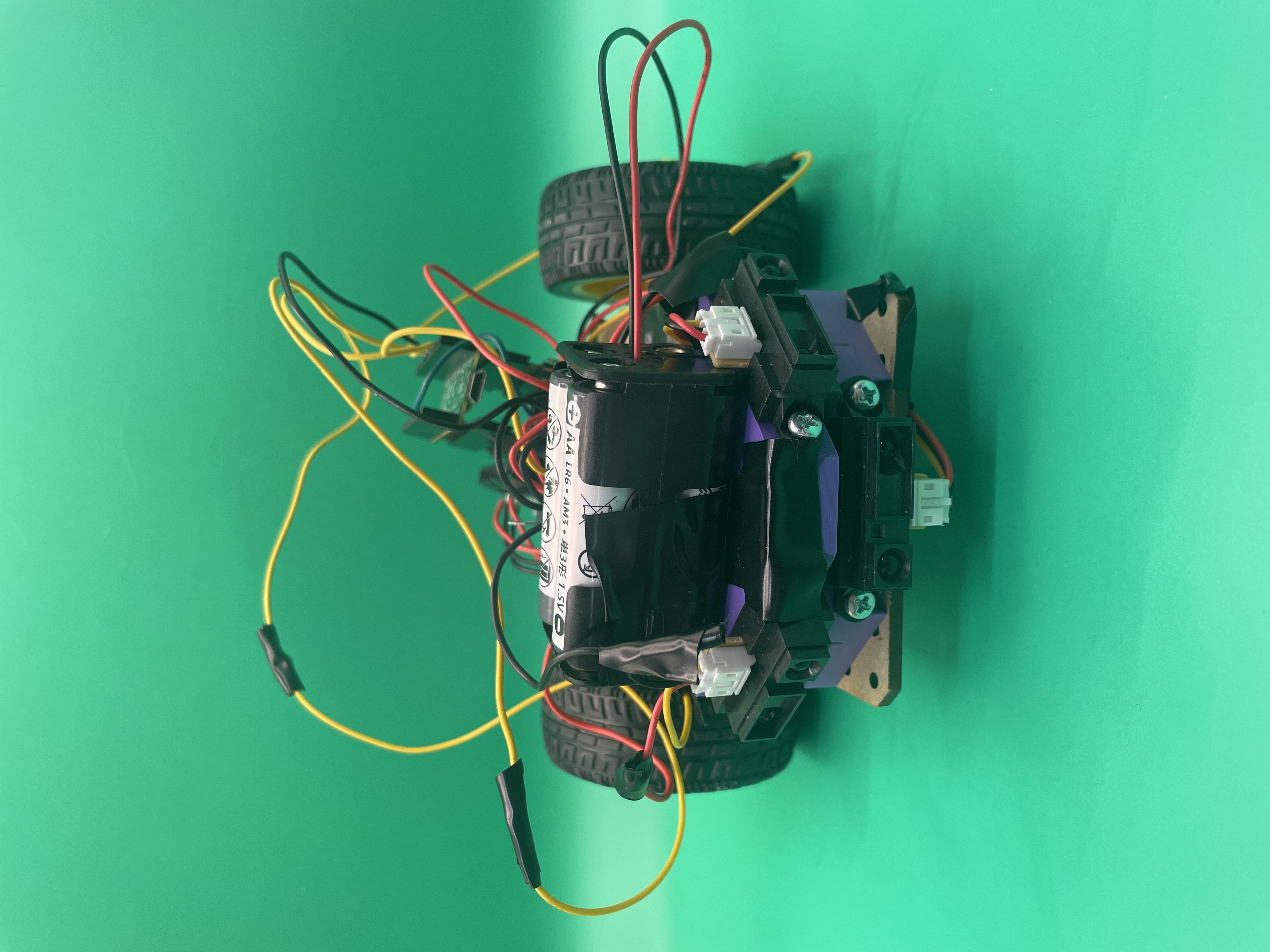
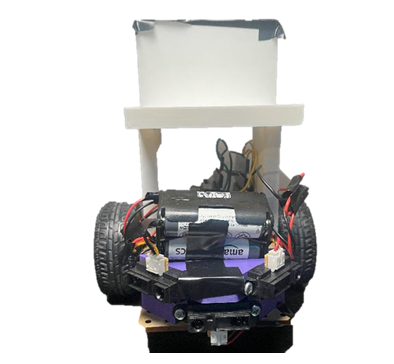
For DP2, a separate robot ran the maze with zero manual input. Control logic ran on three Sharp IR sensors with failsafes and a turn counter, mounted through a custom SolidWorks bracket.
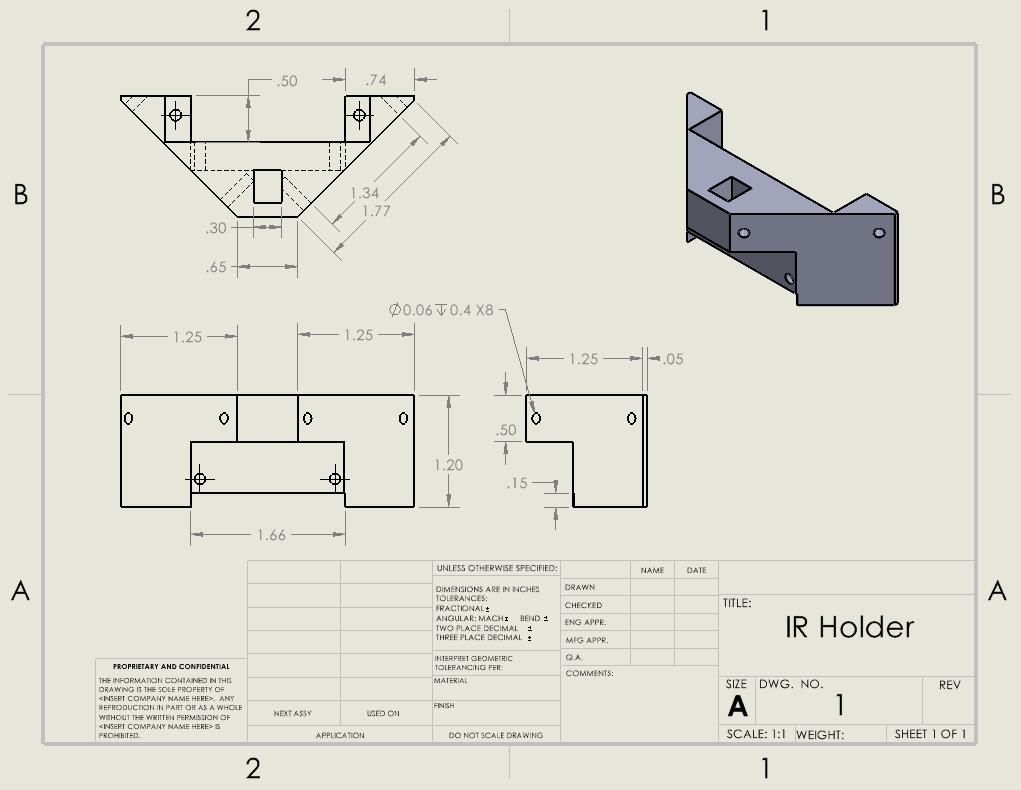
How it was built
- Mechanical: 3D-printed wheel and mechanism parts; laser-cut bridge and basket components
- Controls: Raspberry Pi Pico, Kitronik motor shield, Wi-Fi connection, phone-based remote control
- Software: Python scripts mapping controller inputs to wheel and servo behavior
- Validation: SolidWorks CAD and Excel motor-speed analysis before every build
How it performed
| Robot | Criteria | Result |
|---|---|---|
| Bridge bot | Clears speed bump (1st) | 5 / 5 pts |
| Bridge bot | Deploys bridge | 20 / 20 pts |
| Bridge bot | Places bridge on notch | 20 / 20 pts |
| Bridge bot | Clears speed bump (2nd) | 5 / 5 pts |
| Rescue bot | Clears speed bump (1st) | 5 / 5 pts |
| Rescue bot | Traverses notch | 10 / 10 pts |
| Rescue bot | Retrieves stranded figure | 20 / 20 pts |
| Rescue bot | Clears speed bump (2nd) | 5 / 5 pts |
| Rescue bot | Returns figure to start | 10 / 10 pts |
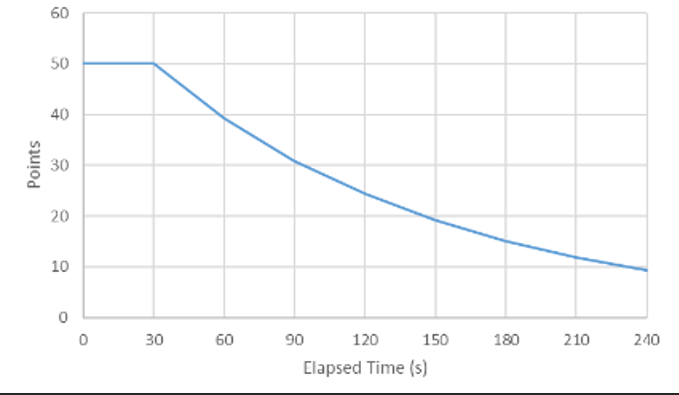
Scoring rewarded speed — full marks up to 30 seconds, decreasing steadily after. Our 1:04 total run cost points on time even with every objective completed.
The robots in action
Raw footage from the competition run, not a polished highlight reel — includes the full sequence from bridge deployment through figure retrieval.
What this project proved
- Turned failed prototypes into simpler, more reliable mechanisms rather than adding complexity to fix them
- Combined CAD, digital fabrication, electronics, and software into one working system
- Used weighted screening criteria instead of picking concepts by gut feel
- Led a team of four through iteration, testing, and a live competition presentation